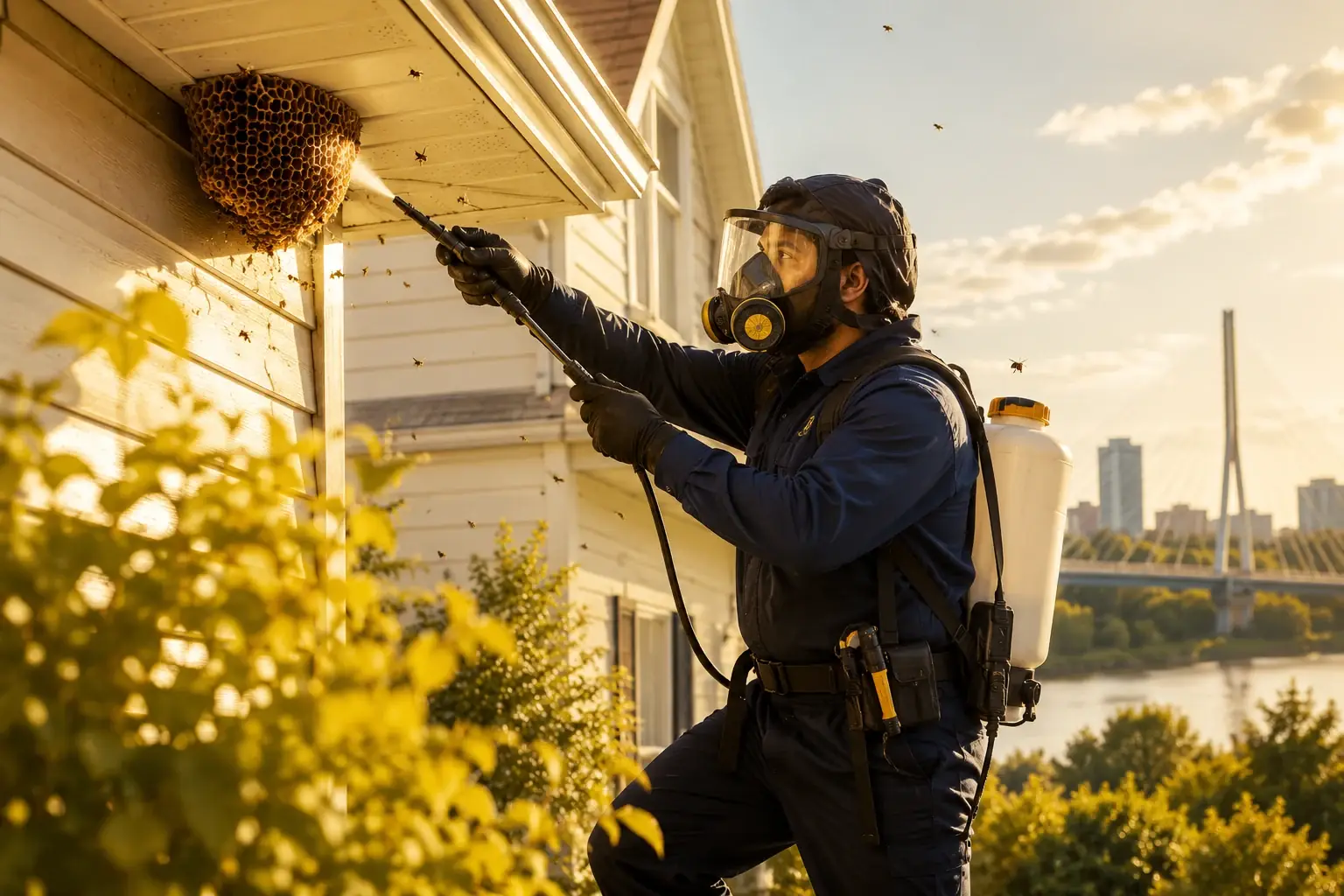
Terra13 technician treating a bee nest at a Winnipeg home
PEST CONTROL WINNIPEG · MANITOBA HONEY · BUMBLE · CARPENTER · GROUND

Bee Extermination in Winnipeg — Honey, Bumble, Carpenter & Ground Bee Services

Licensed Winnipeg bee removal specialists. Honey bees are safely relocated to local Manitoba apiaries — never killed when relocation is possible. Bumble, carpenter, and ground bees are treated only when they threaten people, pets, or property. Free inspection, affordable inspection-based quote, satisfaction guarantee.

Book a Free Inspection
★ 4.9 / 5from 77+ Google reviews
LicensedMB Applicator A-23353/2026
24/7Emergency Response · Same-day
Affordable PricingBased on inspection findings
BEE SPECIES WE HANDLE

The 4 bee species we handle most across Winnipeg & Manitoba

Bees are vital pollinators — we never kill what we can relocate. Honey bees go to local Manitoba apiaries alive whenever possible. Bumble, carpenter, and ground bees are treated only when they pose a real risk to people, pets, or property.

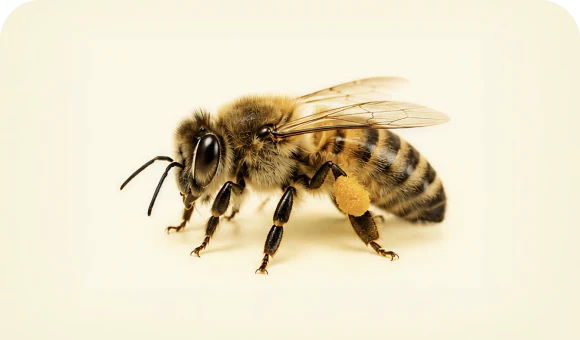
Honey bee carrying pollen
WE RELOCATE — DON'T KILL

Honey Bee

Apis Mellifera
SIZE
12–15 mm
WHERE
Eaves · soffits · attic vents · tree cavities

Golden-brown with darker stripes and translucent wings. We coordinate with local Manitoba beekeepers to vacuum or cut out colonies alive and rehome them. Lethal control is a last resort.
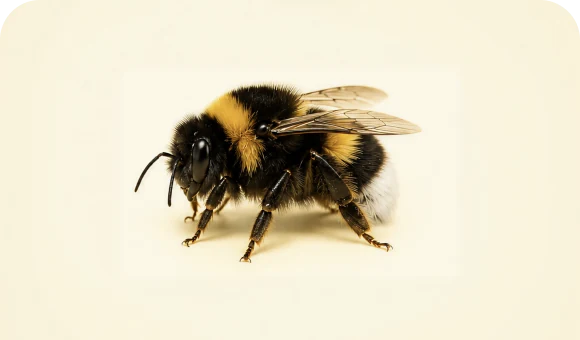
Bumble bee
GROUND OR CAVITY NESTS

Bumble Bee

Bombus Spp.
SIZE
13–25 mm
WHERE
Ground holes · compost piles · wall voids

Big, fuzzy, black with bright yellow or orange bands. A critical native Manitoba pollinator — we leave nests alone when they are not near people or pets and treat only when removal is necessary.

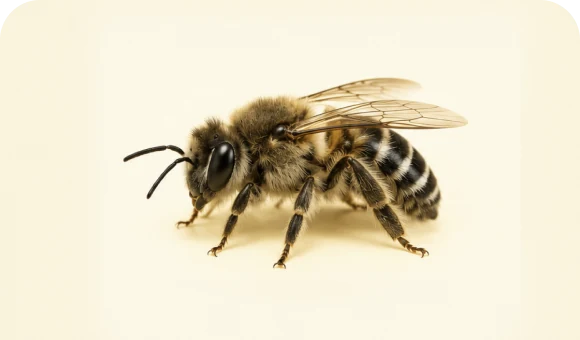
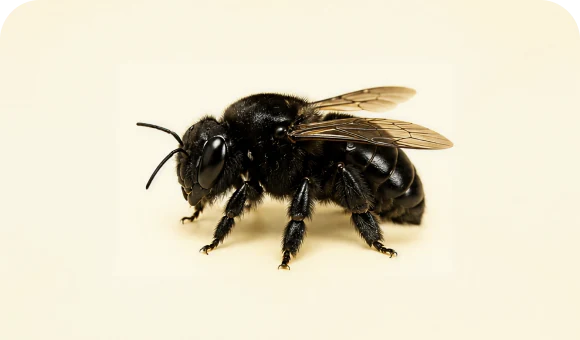
Carpenter bee
WOOD DAMAGE RISK

Carpenter Bee

Xylocopa Virginica
SIZE
20–25 mm
WHERE
Eaves · fascia · siding · deck rails

Black-bodied with a shiny abdomen and often mistaken for a bumble bee. It drills perfect 12 mm holes into untreated wood. Targeted treatment plus wood sealing prevents repeat damage.

Ground bee
SANDY SOIL NESTS

Ground Bee

Andrenidae Spp.
SIZE
8–17 mm
WHERE
Lawns · gardens · bare sandy soil

Small solitary bees nesting in loose, dry soil. Most are gentle and beneficial pollinators. We recommend treatment only when dense nesting creates a genuine stinging risk near paths or play areas.

WHAT TO WATCH FOR

Signs you need professional bee removal in Winnipeg

DIY sprays usually scatter bees, trigger defensive stinging, and fail to reach the queen inside the nest. Call a licensed specialist before someone gets stung or the colony spreads to neighbouring eaves.

Constant bee traffic in and out of a single hole or wall void
A bee swarm clustered on a tree branch, fence, or eave
Round 12 mm holes drilled into eaves, fascia, or wood siding
Small mounds of soil with a single hole in the lawn
Buzzing sound from inside a wall, attic, or soffit
Honey or wax seeping through a ceiling or wall stain
OUR PROCESS

Our 4-step bee removal & relocation process in Winnipeg

Every Terra13 bee removal follows the same predictable sequence — free inspection first, affordable inspection-based quote, no surprises and no upsells.

01

Identify

Identify the species, locate the nest, and decide between live relocation and treatment. Honey bee colonies almost always go to a local Manitoba beekeeper alive.

02

Target

Honey bee swarms and hives are vacuumed or cut out alive with a local beekeeper. Other nests posing a real risk receive targeted treatment at the entrance only.

03

Protect

Health Canada–approved products are applied after dusk when bees are calm — never across open spaces, blooms, or areas where beneficial pollinators forage.

04

Prevent

Seal entry points, repair carpenter bee tunnels, and adjust wood treatment or landscaping. Free re-treatment applies within the warranty period if bees return.

LOCAL CONDITIONS

Why bees nest in Winnipeg eaves, walls, and yards

Winnipeg's short summer pushes bees to nest fast. Honey bee swarms appear from May through July when colonies split and search for new homes — eaves, soffits, attic vents, and tree cavities are prime real estate.

Carpenter bees drill into untreated wood across older homes in River Heights, Wolseley, and Crescentwood, while bumble and ground bees colonize yards and gardens. We adjust the approach to each species and the surrounding landscape.

AFTERCARE

How to keep bees from nesting at your Winnipeg home again

Bee removal solves the immediate nest. These habits stop the next colony from choosing the same eave, wall, or lawn corner during Manitoba's short summer nesting season.

  1. Paint and seal exposed untreated wood — carpenter bees prefer raw cedar and pine.
  2. Cover soffit vents, weep holes, and eave gaps with bee-proof mesh no wider than 6 mm.
  3. Repair previous carpenter bee tunnels; their pheromones attract new bees.
  4. Avoid bright outdoor lighting near eaves and entries because it attracts foraging bees.
  5. Cover open garbage and clean sticky spills; sugar attracts bees and wasps.
  6. Compact bare lawn patches and reseed; ground bees prefer loose, sandy soil.

FAQ

Bee removal Winnipeg — frequently asked questions.

Can't find your answer? Call us any time — we'll pick up.

Pricing is affordable and based on inspection findings, pest activity, access, and treatment scope. We confirm the recommendation before work begins.

Yes. Terra13 runs a 24/7 emergency line for swarms over doorways, aggressive nests near play areas, or situations involving a bee-sting allergy. Same-day response is available for most Winnipeg addresses.

A bumble or carpenter bee treatment takes 30–60 minutes. Honey bee relocation usually takes 2–4 hours depending on access, while ground bee treatment takes about 20–40 minutes.

Yes. Treatments are applied only at the nest entrance after dusk when bees are calm — never across open spaces, flowers, or areas where children and pets play.

No. We ask you to stay inside with windows closed during treatment and keep pets indoors for about an hour afterward.

Free re-treatment applies within the warranty period, typically 60 days for bumble, carpenter, and ground bee jobs. Honey bee relocation results depend on access and removal method.

Almost always. We coordinate with local Winnipeg beekeepers to vacuum, cut out, or capture honey bee colonies and swarms alive and rehome them in apiaries. Lethal control is a last resort when relocation is genuinely impossible.

Need bee removal in Winnipeg or Manitoba?

Free inspection, affordable inspection-based quote, and a satisfaction guarantee. We relocate honey bees alive whenever possible. Call our 24/7 line or send photos and we'll triage the species before we arrive.

Call +1 204-881-5849Book Inspection